Quality & Risk Controlinsights
2026年1月15日
Common Label Printing Defects
Learn about common printing, die-cutting, and lamination defects in label manufacturing, and how professional quality control ensures consistent IML and industrial label performance.
Common Label Printing Defects: A Practical Quality Overview
(From Printing to Lamination)
If you work with IML labels or industrial labels, you already know this:
Most quality problems don’t come from one big mistake, but from small details piling up during production.
In this article, we’ll walk through the most common defects in printing, die-cutting, and lamination, and explain what they actually mean in real production, not just in theory.
This overview is written for buyers, quality teams, and engineers who want clearer communication with label suppliers.
Printing Defects: Where Most Problems Start
Printing is the first critical step.
If something goes wrong here, it usually shows up again in later processes.
Common printing issues you may see:
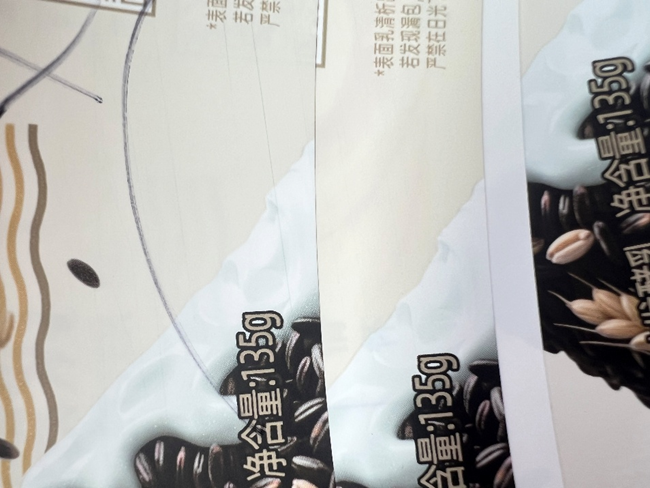
· Doctor Blade Streaks
Thin lines on the printed surface. In most cases, they are caused by blade wear, ink contamination, or incorrect blade pressure.
· Missing Print (Skipping)
Parts of the design are not fully printed. This often happens when ink transfer is unstable or the printing plate is not in good condition.
· Uneven Ink Density (Mottling)
Some areas look darker or lighter than others. This is usually related to ink viscosity, drying speed, or surface tension.
· Color Deviation
The printed color does not match the approved standard. Even small changes in temperature or drying conditions can cause this.
· Ink Spots (Hickies)
Small dots or specks on the label. These are often caused by dried ink particles or dust in the system.
· Misregistration
Colors or layers are slightly out of alignment. This affects both appearance and functional positioning, especially for IML labels.
· Ink Drying on Plate (Dry-up)
Ink dries too fast on the printing plate, which leads to unstable print quality over time.
In practice, experienced suppliers monitor these issues during production, not only at final inspection.
······························································
Die-Cutting Defects: Accuracy Really Matters
After printing, the label shape is defined by die-cutting.
For automated labeling or in-mold labeling, cutting accuracy is critical.
Typical die-cutting problems include:
· Burrs or Flashing
Rough edges caused by worn dies or incorrect cutting pressure.
· Uneven Cutting Edges
The label edge is not clean or consistent, which can cause feeding problems later.
· Miscut (Off-cut)
The cutting position does not match the printed image. This usually leads to waste and rework.
Good die maintenance and regular dimensional checks help avoid these problems before they affect mass production.
······························································
Lamination Defects: More Than Just Appearance
Lamination improves durability and surface protection, but it also introduces new risks.
Common lamination issues:
· Lamination Wrinkles or Creasing
Often caused by tension imbalance or temperature mismatch between layers.
· Insufficient Adhesive
Poor bonding strength due to uneven or insufficient adhesive application.
· Curling After Lamination
The label bends or curls because of internal stress between layers.
· Air Bubbles and White Spots
Trapped air or micro-voids that affect transparency and visual quality.
Stable lamination parameters are key to keeping the label flat and consistent.
······························································
Performance Testing: When Labels Must Do More
Some labels are not just decorative—they are functional.
Typical checks include:
· Electrical Resistance Testing for conductive or functional labels
· Face and Reverse Side Identification to avoid orientation errors
· Electrostatic Discharge (ESD) Testing for static-sensitive applications
These tests make sure the label performs well in real usage, not just on the production line.
······························································
Why This Matters for Buyers and Brand Owners
Understanding common defects helps buyers:
· Ask better technical questions
· Set clearer quality standards
· Communicate more efficiently with suppliers
From raw materials to final inspection, a reliable label manufacturer controls every step with experience, process discipline, and clear standards, often aligned with ISO 9001 quality systems.
Final Thoughts
Good label quality doesn’t happen by accident.
It’s the result of controlled processes, experienced teams, and attention to detail across printing, die-cutting, lamination, and testing.
If you’re sourcing IML or industrial labels, knowing these basics will save time, cost, and unnecessary back-and-forth during production.