Industry Applications & Market Insightsinsights
2026年1月31日
Why IML Packaging Fails on the Line | CPP Manufacturing Insight
Learn why IML packaging fails in production and how proper film structure, thickness, and printing help brands scale safely. CPP manufacturing insight.
Why Your Packaging “Flips the Car” — And How CPP Keeps Your Production on Track
In packaging manufacturing, one small material mistake can stop an entire production line.
Last week, a long-term client came to us after testing a low-cost supplier for a small promotional run. The result?
Wrinkling on the molding line, muddy colors, unstable tension — and nearly half the batch scrapped.
In our industry, we have a phrase for this kind of failure: “Flipping the car.”
At CPP (Color Packaging & Printing Company), we work with brands that produce millions of units per month. For them, saving a fraction of a cent per label means nothing if it risks line downtime, quality claims, or delayed launches.
Below, we share how we evaluate IML film structure, printing methods, and thickness control to keep your packaging stable, scalable, and market-ready.
1. Single-Layer IML Films: Why Simpler Structures Perform Better
Many packaging failures start with over-engineered specifications.
For high-speed injection molding and consistent yield, single-layer IML films often outperform complex structures.
At CPP, our most widely used options include:
- 60μ / 70μ Orange Peel IML — excellent molding stability with a tactile surface
- 60μ Glossy or Matt White IML — balanced thickness, low offset risk
- 50μ Transparent Glossy or Matt IML — industry standard for clarity and clean integration
These structures are not popular by accident.
They provide stable tension, predictable shrink behavior, and excellent machine compatibility, especially on high-output lines.
2. Inner Printing vs. Outer Printing: Durability Under Real Conditions
For products exposed to frequent handling or long-distance logistics, inner printing offers a clear advantage.
While it involves a higher initial cost, inner printing delivers:
- Superior scratch resistance
- Longer shelf-life appearance
- Better protection during transportation
Lamination Trends We See in the Market
- Solvent-free lamination Increasingly adopted in the EU and global markets due to environmental regulations and cleaner processing.
- Dry lamination Still essential for complex, multi-layer structures requiring strong bonding and long-term stability.
At CPP, we recommend lamination methods based on structure complexity, not trends alone.
3. Critical Film Thickness: Why 60μ–100μ Is the Safe Zone
In real production environments, thickness tolerance matters more than theory.
Through years of calibration and testing, we’ve identified 60 μ–100 μ as the most reliable thickness range for IML films.
- Too thin → unstable tension, wrinkling, poor tracking
- Too thick → deviation, misalignment, feeding issues
Our roller calibration and tension control systems are designed to ensure your rolls stay stable — not “walk” — on automated equipment.
4. The Three Defects That Cause Most Production Failures
When customers worry about “flipping the car,” they’re usually worried about these three issues:
• Blade Streaks
Often linked to ink viscosity or humidity control. Poor balance leaves visible streaks across printed surfaces.
• Missed Printing
Typically caused by roller surface damage or pressure inconsistency.
• Misregistration
A result of tension fluctuation during printing or lamination.
To manage these risks, CPPC offers:
- Gravure printing — ideal for strict Pantone control and up to 10-color consistency
- Flexographic printing — increasingly popular for vibrant results using water-based inks
The key is matching the printing technology to your brand’s performance requirements, not forcing one method for every job.
Scaling Packaging Without Production Stress
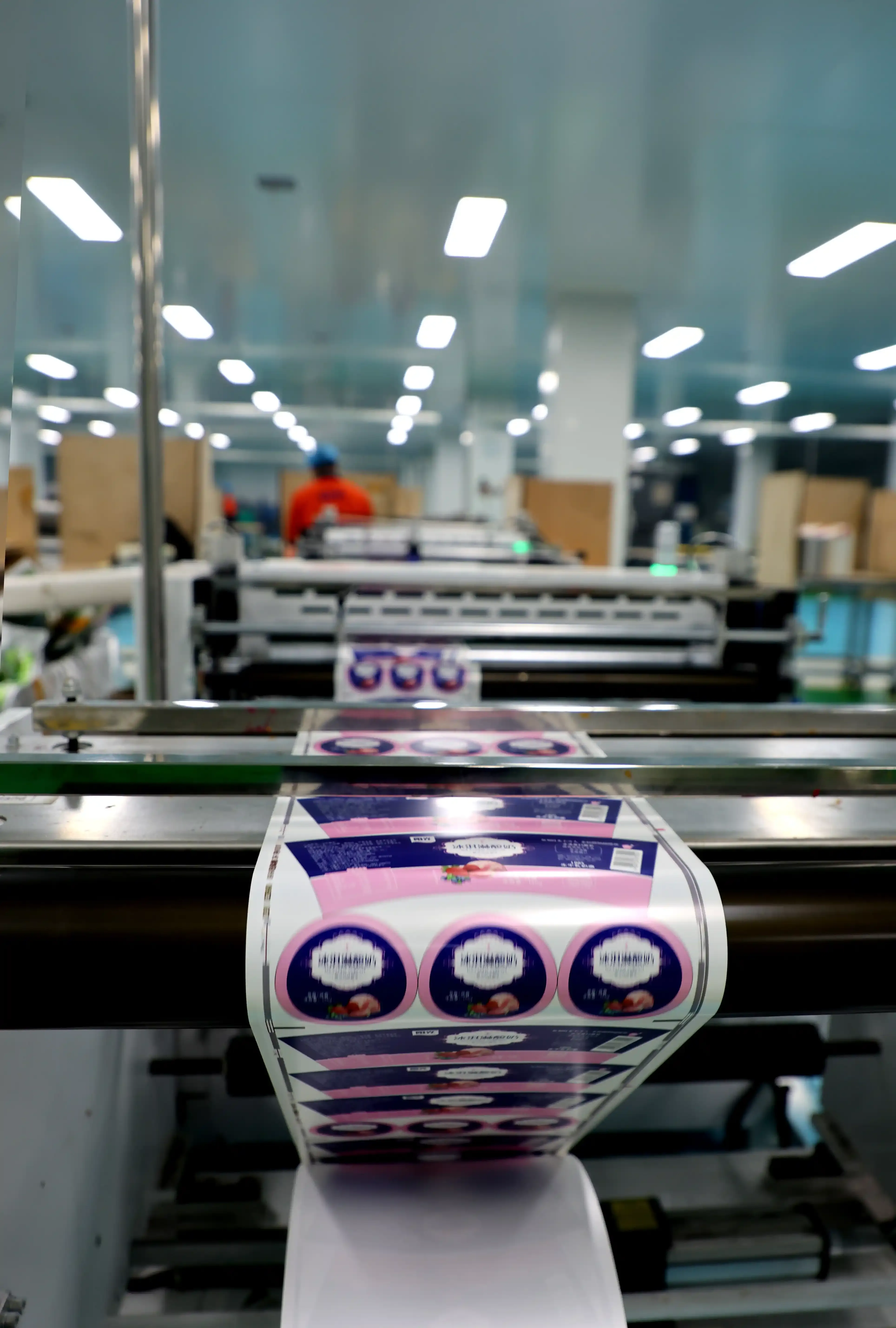
At CPP, packaging is not just about appearance — it’s about reliability at scale.
With two manufacturing bases and a monthly capacity of over 10 million square meters, we support high-volume brands that cannot afford production instability.
From material selection to printing control, we focus on what actually works on the factory floor — and what survives shipping, storage, and market use.
If you are tired of “budget experiments” and want a packaging partner who understands the difference between 60μ orange peel and 70μ matte white by feel, we’re ready to support your next project.
Looking to scale your IML packaging safely and consistently?
Contact CPP (Color Packaging & Printing Company) to discuss your next production run.